 Skip to content

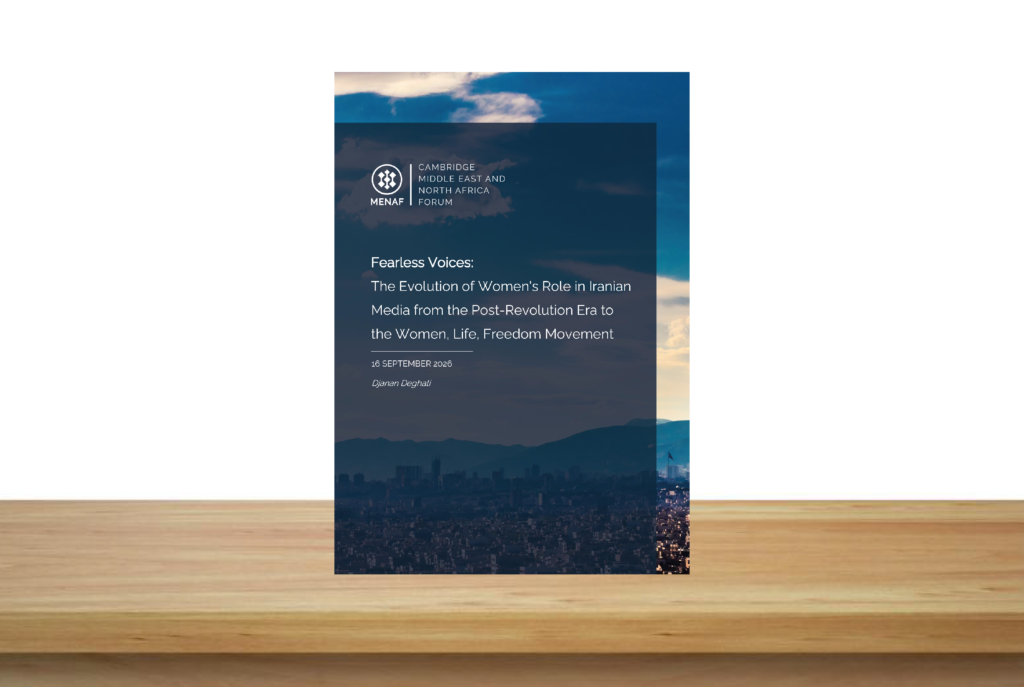
“Fearless Voices: The Evolution of Women’s Role in Iranian Media from the Post-Revolution Era to the Women, Life, Freedom Movement” traces four decades of women’s journalism, resistance, and knowledge production in Iran
The report argues that Iranian women journalists have transformed the media from an institution used to enforce gender exclusion into an enduring arena of resistance, knowledge production, and political agency. Despite censorship, publication closures, surveillance, arrest, and exile, women have continued to document experiences and challenge official narratives that the state has sought to suppress.
Written by Djanan Deghati, the inaugural Mahsa Jina Amini Fellow at Cambridge MENAF, and supervised by Dr Nina Ansary, Director of the Forum’s Women’s Leadership Initiative, the report brings together feminist theory, media studies, and modern Iranian political history. It addresses a gap in existing scholarship by examining women journalists not solely as victims of repression, but as producers of political and social knowledge.
The report traces five phases in the development of women’s journalism in Iran: women’s exclusion from media institutions after the 1979 Revolution; the emergence of the feminist and reformist press in the 1990s; the transition to blogs and digital media during the 2000s; the growth of hybrid and transnational reporting networks after the 2009 Green Movement; and the rise of fearless journalism during the Woman, Life, Freedom uprising.
At the centre of the study are Niloofar Hamedi and Elaheh Mohammadi, whose reporting helped bring the death of Mahsa Jina Amini to public attention in September 2022. The report situates their work within a longer journalistic tradition shaped by women such as Shahla Sherkat, founder of the pioneering magazine Zanan, and Jila Baniyaghoob, whose reporting continued despite censorship, arrest, and imprisonment.
The report introduces “fearless journalism” as a gendered mode of resistance: journalism undertaken in conditions where publishing the truth carries an understood personal cost. It shows how women journalists have combined professional reporting with digital networks, visual documentation, and transnational collaboration to preserve evidence, contest state narratives, and keep women’s experiences in the public record.
Fearless Voices: The Evolution of Women’s Role in Iranian Media is published through Cambridge MENAF’s Women’s Leadership Initiative, with institutional support from the Forum’s Executive Committee.
The full report is available at: https://cmenaf.org/policy-paper-fearless-voices-the-evolution-of-womens-role-in-iranian-media/.
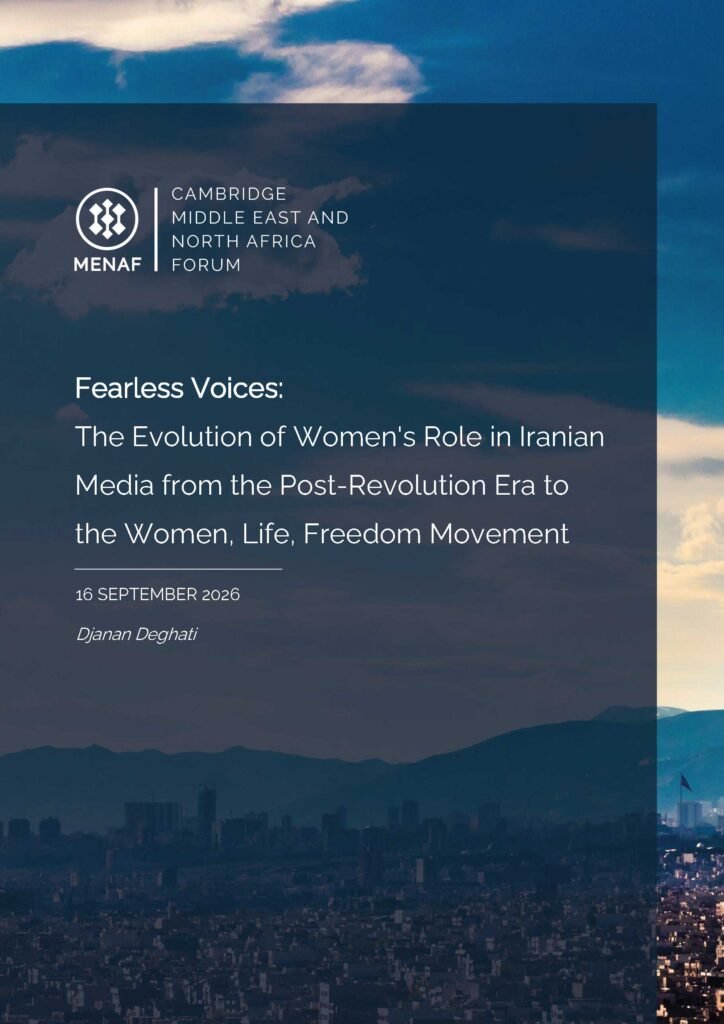
First edition: September 2026
This paper argues that Iranian women journalists have transformed the country’s media from a state-controlled instrument of gender exclusion into a sustained arena of resistance, knowledge production, and political agency.